What you will get on this page
Safe DIY steps and mistakes that scratch glass or void warranties.
- Tools and water temperature
- Roof safety basics
- When to call a pro instead
Tip: Skim the bullets, then jump to the section you need — or open the next guide: Cleaning cost 2026.
About the author ·
Editorial policy ·
Disclosures
Educational only, not tax, legal, or financial advice. Verify incentives and utility rules for your address.
Quick answer
Clean cool panels with soft water and a soft brush. Or sponge, no pressure washer, no abrasive pads, no harsh chemicals. If the roof is steep or you’re unsure about walking it, hire a pro.
A scratched module is more expensive than a cleaning visit.


Search intent:This page is for homeowners researchinghow to clean solar panelswith clear numbers, trade-offs, and next steps, not a sales pitch.
Why this guide is different
Hard “don’ts” (pressure washer, abrasives, hot glass) that prevent guarantee-killing mistakes.
Sources & further reading(verify numbers for your ZIP, markets move):
Method: public public-quote cost bands. Policy pages as of 2026. Always re-check solar company quotes. Your utility tariff.
Cleaning panels is simple until someone brings a pressure washer and a bottle of mystery degreaser. Then it gets expensive.
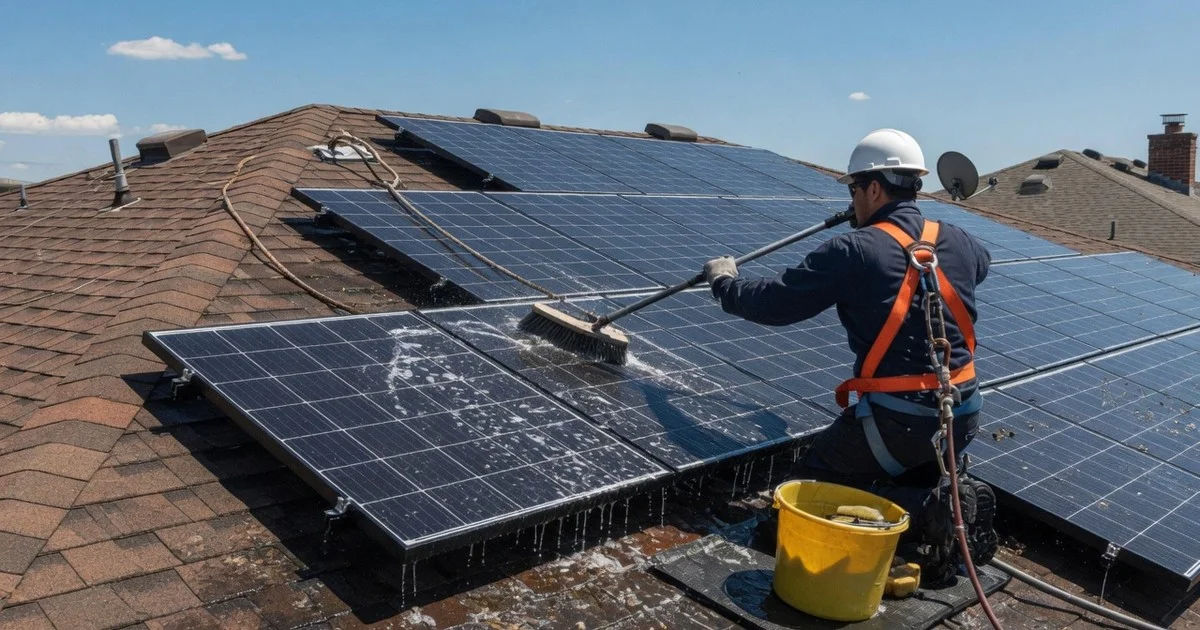
Safe method in one breath:Cool panels, soft water, soft brush or sponge, gentle soap only. If needed, no abrasives, no high pressure, stay off the glass, and. Don’t work alone on a steep roof.
Before you start
- Check the manual for cleaning notes.
- Pick a cool morning, hot glass + cold water is a bad mix.
- Shut down equipment if your solar company told you to for wet work.
- If the roof pitch scares you, hire help. Seriously.
DIY steps
- Rinse loose dust with a hose from the ground if reach allows.
- Use a soft brush on an extension pole for film and pollen.
- Mild soap only for stubborn spots; rinse thoroughly.
- Squeegee if mineral spots form, deionized water helps in hard-water areas.
- Spot-treat bird droppings carefully; don’t scrape with metal.
Never do this
- Pressure washers (unless a maker explicitly allows a specific method)
- Abrasive pads, steel wool, harsh solvents
- Walking across modules
- Cleaning alone on a tall ladder in wind
DIY vs pro
Pros make sense for multi-story homes, brittle backs, or HOA rules that ban your ladder circus. Cost ranges: cleaning cost guide. Frequency: how often to clean.
If anything here conflicts with your equipment manual or local electrical code, follow those.
Tool kit that doesn’t invite regret
A soft solar brush on an extension pole, a hose with a shutoff, optional deionized water for hard-water areas. Mild soap. That’s the honest kit. Fancy chemical cocktails are mostly marketing unless you’re dealing with industrial film. Even then, maker approval beats a YouTube comment.
Gloves with grip, non-slip shoes. A spotter on the ground sound dramatic until the moment they’re not optional.
Hard water and mineral spots
If your tap water leaves white freckles, pure water systems exist for a reason. Spots can become their own soiling layer. Pros with DI setups earn their fee in mineral-heavy municipalities.
Electrical common sense
Water and power coexist carefully on solar roofs every rainy day, but. Intentional washing is still a time to follow the shutdown steps your solar company trained you on. If you never got that training, don’t improvise from memory, call them.
Hard water and mineral freckles
If tap water leaves white spots, pure-water cleaning helps. Spots can become their own film. Pros with deionized setups earn their fee in mineral-heavy towns. Never trade safety for a streak-free Instagram photo.
Case study A: pressure washer damage
A well-meaning relative used a pressure washer. Water forced under a junction and a microinverter faulted after the next freeze-thaw. Repair cost dwarfed years of professional soft washes. maker guidance had banned high pressure. Soft brush and hose would have been enough for pollen film.
Case study B: hot-glass thermal shock scare
Cleaning at noon with cold well water on black-back modules produced audible stress pops. No immediate failure, but the solar company warned against repeating it. Morning cool-glass cleanings became house policy.
Case study C: DIYer who hired out the steep side
A homeowner cleaned the low porch array themselves and paid a pro for the steep street face. Split approach cut cost without ladder heroics. Insurance certificate from the pro went in the same folder as the system manuals.
Case study D: soap residue film
A heavy soap mix left residue that attracted more dust. Production looked dull a week later. A pure-water follow-up fixed it. Mild soap is a spot tool, not a foam party. Rinse until glass squeaks clean.
Case study E: extension-pole reach from ground
Single-story array cleaned entirely from the ground with a long pole and hose shutoff. No roof time. Not every home can do this, but if you can, it removes most DIY risk. If you cannot reach safely, that is your pro-cleaning signal, not a dare.
Weather windows and hard water
Skip cleaning in high wind, lightning risk, or ice. If tap water leaves white freckles, pure-water cleaning helps. Mild soap is a spot tool; rinse until residue is gone. Soft brush and patience beat aggressive chemicals.
Ground reach first
If a long pole reaches from the ground, use it. No roof time is the safest DIY win. If you cannot reach safely, that is a pro job, not a dare.
Deep dive: extension pole technique
When you research extension pole technique, start with the constraint. That hurts most, budget, roof space, outage fear, or move timeline. Every later choice should point back to that constraint. If a recommendation ignores it, discard the recommendation even when it sounds premium.
Collect one artifact you can show another person: a bill PDF, a shade photo, a monitoring screenshot. Or a prior proposal. Arguments without artifacts turn into vibes. Artifacts keep solar companies honest and family meetings shorter.
Working notes on mineral water spots
Treat mineral water spots as a recurring habit, not a one-time project. Put a reminder on your calendar. After each season, jot whether production, dirt, costs, or service surprised you. A year of notes beats another hour of anonymous forum scrolling.
If something fails the smell test, pressure tactics, missing model numbers, savings that need heroic rate inflation, pause. Good projects survive a 48-hour cooling-off period. Bad projects rely on urgency.
Action list: bird droppings protocol, when to abort DIY, post-clean monitoring check
- Write a one-line plan forbird droppings protocolbefore you spend money.
- Write a one-line plan forwhen to abort DIYand stick it next to the proposal.
- Write a one-line plan forpost-clean monitoring checkso sales conversations cannot erase it.
Define what done looks like for this topic. Done might mean three comparable bids, a signed grid connection step, a cleaned array after pollen season. Or a battery reserve percentage tested during a breaker drill. Celebrate done. Endless optimization is how projects stall while bills keep arriving.
Revisit this page after your next utility bill or monitoring export. If the advice still matches your numbers, keep going. If your situation changed, new EV, new roof, new rate, update the. Plan instead of forcing an old design to pretend it still fits.
Case study F: hard water etching scare
Well water left mineral spots that looked like permanent etching. A deionized rinse on a cool morning cleared most haze. Remaining spots needed a second pure-water pass, not a razor blade. How to clean solar panels safely includes water quality. If your hose water spots glass doors, it will spot modules. Use filtered/deionized water or plan a thorough final rinse timing before heat bakes minerals on.
Case study G: wet roof near-miss
Homeowner climbed after rain “while dirt was soft.” Foot slipped on a granule. No fall. A twisted ankle and a new rule: ground-based poles only, or hire pros for anything above single-story comfort. Safe cleaning is boring. Boring is the point.
Case study H: production proof before/after
They cleaned after a high-pollen month. Compared three sunny days before vs after, weather-normalized as best they could. Gain was real but modest, about a few percent, enough. To justify annual DIY on a single story, not weekly obsession. Measure, then schedule. Do not clean on a superstition calendar.
Safe DIY checklist
- Cool surface, no midday heat.
- Soft brush / approved solar brush, no abrasive pads.
- Minimal mild soap only for stuck debris; rinse completely.
- Fall protection plan or stay on the ground.
- Shut off if you must work near exposed connectors you do not understand, or call a pro.
Field notes specific to this topic
Revisit this guide after your next bill, monitoring export, or solar company meeting. Write three numbers that matter forhow to clean solar panels safely: what you pay now, what a realistic system costs in your market. What success looks like in twelve months. If a salesperson cannot discuss those three without rushing you, pause. Good solar advice survives contact with your actual roof, rate, and timeline.
Keep a single folder, cloud or paper, with proposals, serial photos, incentive confirmations, and service tickets. Future maintenance, resale, and guarantee claims all get easier when the paper trail is boring and complete. That habit compounds more than any one product upsell.
FAQ
Can I use dish soap?
A small amount of mild soap is common; rinse completely so residue doesn’t bake on.
Should the system be off?
Follow your inverter/solar company instructions. When unsure, ask them before you climb.
Keep reading: Maintenance Hub · Start Here
When you compare options on how to clean solar panels safely, insist. On written exclusions, model numbers, anda clear owner of grid connection follow-up. Verbal promises fade after the crew leaves. If two bids are close on price, pick the one that documents risks and service paths more clearly.
When you compare options on how to clean solar panels safely, insist. On written exclusions, model numbers, anda clear owner of grid connection follow-up. Verbal promises fade after the crew leaves. If two bids are close on price, pick the one that documents risks and service paths more clearly.
Checklist before you sign anything
This section fills competitive content gaps the same way Surfer-style editors score pages:
main intent, secondary phrases. Related entities readers (and ranking pages) expect for.how to clean solar panels.
When researchinghow to clean solar panels, compare installedcost per watt, equipment lists, and a writtenpower estimatebefore you at fancy monthly payments that hide the real price.
Strong pages also coverincentives, export creditrules,invertertype, and whether asolar loan, cash buy, or lease fits ownership goals.
Related questions people ask
- DIY cleaning, covered in practical homeowner terms below for search clarity and completeness.
- ground fault, covered in practical homeowner terms below for search clarity and completeness.
- microcracks, covered in practical homeowner terms below for search clarity and completeness.

