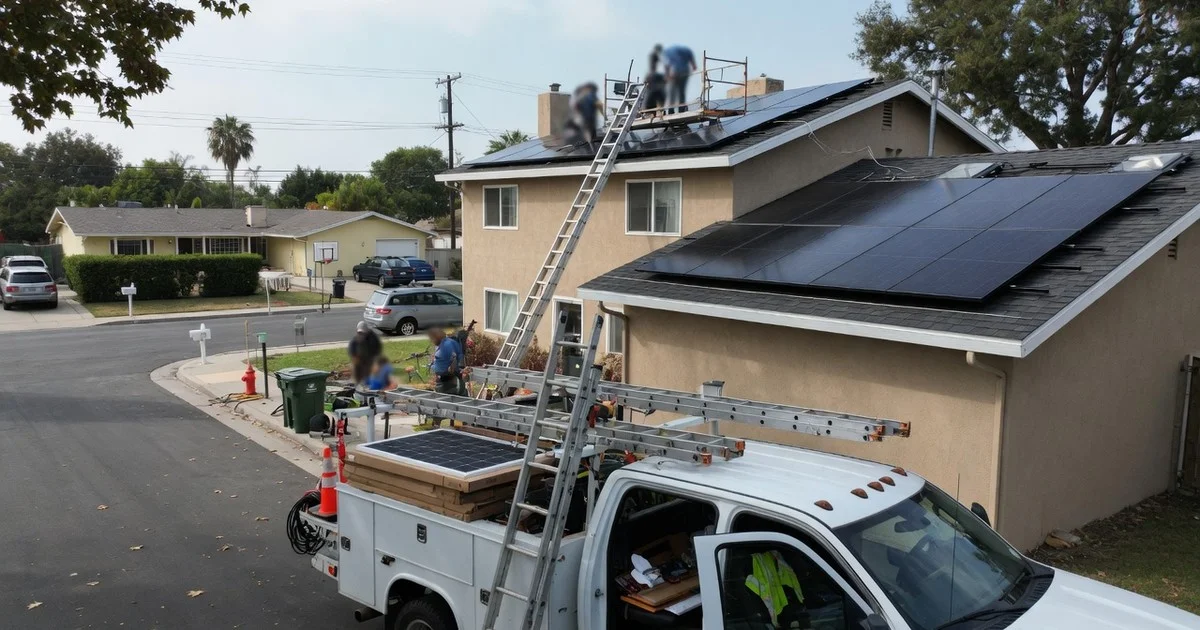
What you will get on this page
Use this scorecard before you sign — warranties, equipment, and sales red flags.
- How to compare quotes fairly (not brand ads)
- Installer quality signals that matter
- Financing tricks that raise total cost
Tip: Skim the bullets, then jump to the section you need — or open the next guide: Solar cost USA 2026.
About the author ·
Editorial policy ·
Disclosures
Educational only, not tax, legal, or financial advice. Verify incentives and utility rules for your address.
Quick answer
The best solar company is the one that wins on price per. Watt, written equipment list, workmanship guarantee, andlocal install quality, not TV ads. Collect three itemized bids and treat national brands and strong locals as separate shortlists.
A vague “premium system” line with no SKUs is not a quote. It’s a brochure.


Search intent:This page is for homeowners researchingbest solar companies usa 2026with clear numbers, trade-offs, and next steps, not a sales pitch.
Why this guide is different
A bid checklist that ranks companies by written $/W, SKUs, and workmanship, not TV ad spend.
Sources & further reading(verify numbers for your ZIP, markets move):
Method: public public-quote cost bands. Policy pages as of 2026. Always re-check solar company quotes. Your utility tariff.
Search results love ranked logos. Your roof needs something blunter: a company that installs what it promised, at a price you. Can explain to a skeptical spouse, with service that still answers the phone in year six.
Bottom line:The “best” company is the best written package for your house. Collect three itemized bids. Compare installed $/W, model numbers, guarantees, and local workmanship, not ad spend.
What belongs on every bid
- Cash price and $/W
- Panel model and count
- Inverter model and count
- Year-1 power estimate (kWh) with assumptions
- Workmanship guarantee length and who performs guarantee labor
- Exclusions list (panel upgrade, roof work, trenching)
- Permit and grid connection responsibilities
If a company won’t put those in writing, you’re shopping a story, not a system.
Red flags that still work in 2026
- Today-only pricing that expires at dinner
- “Tier-1 panels” with no model numbers
- Loan payment shown without cash price
- No license or insurance proof
- Savings guarantees that ignore your utility’s export rules
National brand vs local crew
National names can bring process and financing menus. Local shops can bring faster service and better roof coordination. I’ve seen both excellent and sloppy work in each category. Judge the package and the people who will stand on your shingles.
How many bids?
Three solid ones. Five if the first set is chaos. Keep system size similar so you’re not comparing a 8 kW dream to a 12 kW billboard. Price context:solar costs. Financing traps: financing guide.
Questions that separate pros from pitch decks
- What’s the all-in cash $/W before incentives?
- Which exact equipment SKUs are in this design?
- What happens if my main panel needs an upgrade?
- Who pulls permits here, and what’s a normal grid connection timeline?
- Who owns the monitoring account after PTO?
- Who handles a failed inverter in year five in my county?
System basics if you’re new: home solar guide. Worth running numbers first: is solar worth it.
Not an endorsement of any company.
How to sanity-check reviews
Five-star floods with identical phrasing are a smell. for detailed reviews that mention permits, utility delays, and punch-list fixes. A company with mostly 4-star reviews that explain problems. Resolutions can be healthier than a suspicious perfect score.
Call two recent customers if the job is large. Ask how change orders were handled and whether the monitoring account was set up in the homeowner’s name.
After the contract: project management tells
Good companies send a clear timeline, a single point of contact, and design drawings before trucks arrive. Bad companies ghost until the day of install, then discover your panel is “unexpectedly” too small. Build a simple email folder now; you’ll need the paper trail if something slips.
On install day, photograph attic penetrations and grounding if you can do so safely. It’s not about distrust, it’s about having evidence if a leak appears next season.
guarantee labor vs product guarantee
makers cover equipment; someone still has to climb the roof. Ask who performs labor for inverter swaps in year six and whether there’s a trip charge. “Lifetime product guarantee” without labor clarity is incomplete.
How to read reviews without getting fooled
Five-star floods with identical phrasing are a smell. Prefer detailed reviews that mention permits, utility delays, and punch-list fixes. A company with honest four-star stories can be healthier than a suspicious perfect score. Call two recent customers on larger jobs and ask how change orders were handled.
guarantee labor vs product guarantee
makers cover equipment; someone still has to climb the roof. Ask who performs labor for inverter swaps in year six and whether there is a trip charge. “Lifetime product guarantee” without labor clarity is incomplete.
Case study A: national brand, local crew miss
A national logo sold a polished design. The subcontracted roof crew left a messy penetration. Monitoring worked; the ceiling stain appeared after the first storm. guarantee ping-pong started between brand and sub. The homeowner’s photos from install day settled the claim. They still recommend demanding who physically installs, and photographing penetrations.
Case study B: local solar company wins on paperwork
A smaller company was $0.08/W higher than the cheapest national bid. They already knew the utility portal, carried a clear panel-upgrade line. Set monitoring in the homeowner’s email before final payment. grid connection finished weeks sooner. Time without production has a dollar value; the “more expensive” bid produced earlier.
Case study C: three-bid discipline
Bid one: incomplete equipment list. Bid two: strong price, weak reviews for service. Bid three: mid price, detailed exclusions, real customer references. They chose three, then negotiated two add-ons down by pointing at bid two’s cash number. Process beat brand loyalty.
Case study D: change-order transparency
Mid-install, rafters needed sistering. Company A had pre-disclosed a written rate card for structural extras. Company B’s contract said “TBD.” The homeowner had chosen A partly for that boring appendix. The change order hurt, but it was priced like a known risk, not a blank check. When you compare companies, ask for the rate card on common surprises: panel upgrade, sistering, extra attachments, trenching.
Case study E: monitoring day-zero failure
Install looked perfect. Night one, zero production data. The company remote-fixed a gateway config before PTO. A weaker outfit might have said “wait for the utility.” Responsiveness in. The first 72 hours predicts later service quality better than brochure awards.
Reference-call script that works
When you call a past customer, ask: Did the final price match the bid? How long from install to permission-to-operate? Who fixed the first problem, and how long did it take? Would you use them for a battery later? Vague five-star praise is nice; those four answers are decisive.
How to score three bids on one sheet
Draw five columns: cash $/W, equipment clarity (1-5), guarantee labor clarity (1-5), timeline realism (1-5). Trust after reference calls (1-5). Fill them the same evening you receive each bid so memory does not rewrite history. Totals are not sacred, they stop you from choosing only the last pitch you heard.
If two companies tie, prefer the one that already named your utility’s portal quirks. Local scar tissue is a feature.
Licensed and insured in practice
Ask for a certificate of insurance dated this year. And a license number you can verify on a state site. Screenshot the verification page. Also ask whether subcontractors are covered under the same policy. Many solar jobs are multi-crew events.
Change-order rate cards
Common surprises include main-panel upgrades, rafter sistering, extra roof attachments, and trenching. A good company can show how those are priced before they appear as a panic invoice. Ask for that card before you sign.
Case study D: license and insurance that matched
Company A’s website said “fully licensed.” The license number traced. To a salesperson’s old LLC, not the entity on the contract. Company B’s numbers matched state lookup, workers’ comp, and roofing endorsement. They cost $0.11/W more. After a ladder incident on another job in town, the homeowner slept better knowing coverage was real. Best solar companies earn trust in public records, not only in ad spend.
Case study E: design revision scorecard
After shade analysis, Company C redrew layout the same day and emailed before/after kWh. Company D argued the original design was “fine.” Company E took a week. Sent a vague phone summary. Responsiveness during design predicted install communication later. Pick partners who rewrite when data changes.
Case study F: post-PTO service test
Six months after permission-to-operate, a microinverter dropped offline. Company F’s ticket system assigned a tech in 48 hours and replaced under guarantee. A neighbor with a bargain national brand waited three weeks for a subcontractor visit. When you rank solar companies in the USA, ask references. About the first service call, not only install day polish.
Comparison table to fill yourself
For each bidder note: installing crew (employee vs sub), monitoring. Owner email, written change-order rates, utility experience in your territory, and. A real reference from the last 12 months. Score 1-5. Highest total usually beats lowest $/W alone.
Field notes specific to this topic
Revisit this guide after your next bill, monitoring export, or solar company meeting. Write three numbers that matter forbest solar companies usa 2026: what you pay now, what a realistic system costs in your market. What success looks like in twelve months. If a salesperson cannot discuss those three without rushing you, pause. Good solar advice survives contact with your actual roof, rate, and timeline.
Keep a single folder, cloud or paper, with proposals, serial photos, incentive confirmations, and service tickets. Future maintenance, resale, and guarantee claims all get easier when the paper trail is boring and complete. That habit compounds more than any one product upsell.
FAQ
How do I choose a solar solar company?
Three itemized bids, same size class, written equipment and guarantees, verified license/insurance.
Is cheaper always better?
No. Cheap with missing models and weak workmanship is expensive later.
Keep reading: Buy Solar Hub · Start Here
When you compare options on best solar companies usa 2026, insist on written exclusions, model numbers. A clear owner of grid connection follow-up. Verbal promises fade after the crew leaves. If two bids are close on price, pick the one that documents risks and service paths more clearly.
Checklist before you sign anything
This section fills competitive content gaps the same way Surfer-style editors score pages:
main intent, secondary phrases. Related entities readers (and ranking pages) expect for.best solar companies usa 2026.
NABCEP credentials are one signal of solar company training, not a substitute for local license and insurance checks.
When researchingbest solar companies usa 2026, compare installedcost per watt, equipment lists, and a writtenpower estimatebefore you at fancy monthly payments that hide the real price.
Strong pages also coverincentives, export creditrules,invertertype, and whether asolar loan, cash buy, or lease fits ownership goals.
Related questions people ask
- NABCEP, covered in practical homeowner terms below for search clarity and completeness.
- itemized quote, covered in practical homeowner terms below for search clarity and completeness.
- customer reviews, covered in practical homeowner terms below for search clarity and completeness.
- sales pressure, covered in practical homeowner terms below for search clarity and completeness.
- cancellation, covered in practical homeowner terms below for search clarity and completeness.

