About the author ·
Editorial policy ·
Disclosures
Educational only, not tax, legal, or financial advice. Verify incentives and utility rules for your address.
Quick answer
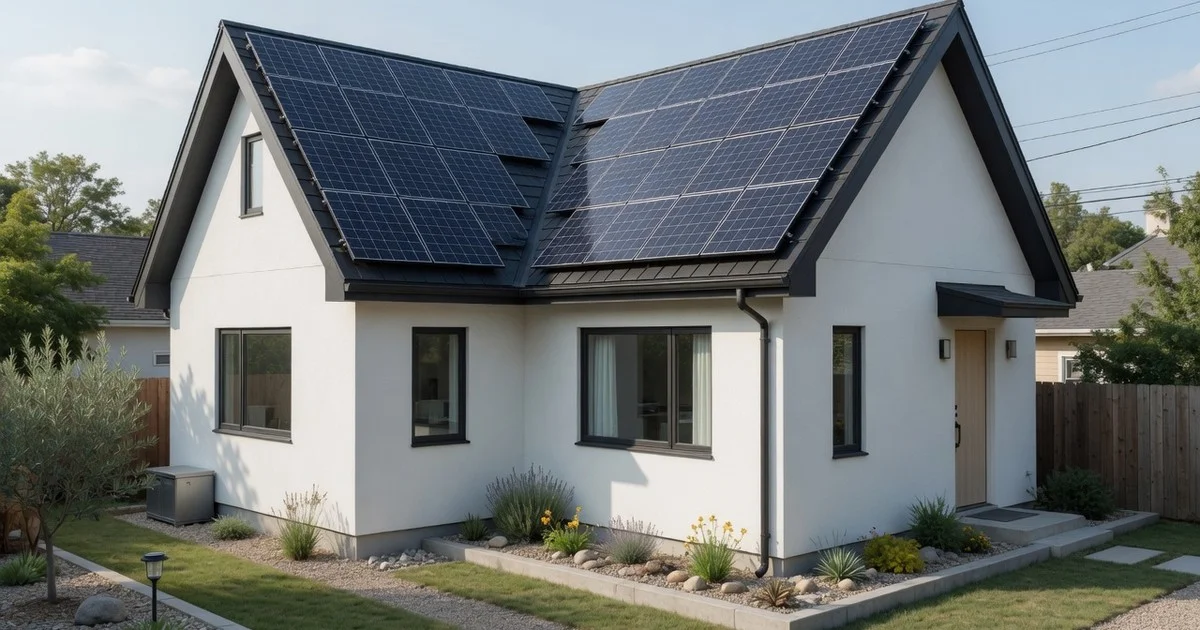
On small roofs, put first high-efficiency modules. Watts-per-panel, map shade first. Pick an inverter strategy that doesn’t waste limited plane area. Fewer high-watt panels often beat a crowded low-watt layout.
If shade hits half the day, no premium panel brand fixes geometry.


Search intent:This page is for homeowners researchingbest solar panels for small homeswith clear numbers, trade-offs, and next steps, not a sales pitch.
Why this guide is different
Watts-per-panel + shade map first, brand prestige second on small planes.
Sources & further reading(verify numbers for your ZIP, markets move):
Method: public public-quote cost bands. Policy pages as of 2026. Always re-check solar company quotes. Your utility tariff.
Small homes don’t need “cute solar.” They need every square foot to work. That changes which modules and layouts make sense.
Priority stack for small roofs:high efficiency, higher wattage modules, honest shade analysis, and an inverter approach that doesn’t waste partial-shade planes. Fewer strong panels beat a quilt of weak ones.
What “best” means when space is scarce
- Higher efficiency (more power per square foot)
- Higher nameplate watts (fewer modules for the same kW)
- Strong low-light behavior if mornings/evenings matter
- guarantee you can claim
Brand trophies matter less than fit. A premium module that can’t clear setbacks is just expensive inventory.
Layout rules that save small roofs
- Map shade before you fall in love with a panel brand.
- Use the best roof planes first; don’t force north-facing junk just to hit a marketing kW.
- On complex roofs, microinverters or optimizers can keep one chimney shadow from dragging a whole string.
- Right-size to usage, oversizing into bad planes wastes money.
Inverter choice on compact arrays
Microinverters shine when planes face different directions. String inverters can be fine on a single clean plane. Hybrid options matter if storage is already in the plan (batteries).
Size and budget tools: panel calculator, cost calculator, full home guide.
Setbacks and “paper roof” vs real roof
Fire access setbacks and keep-out zones around vents steal more modules than people expect. A 20-panel fantasy can become 14 after code. That’s not the designer being difficult, that’s the roof being a roof.
Ask for a layout drawing with dimensions, not only a kW target.
When ground-mount or carport ideas appear
If the roof is hopeless but the yard isn’t, ground structures can unlock capacity. They bring trenching, aesthetics fights, and different permitting. Price them as a separate decision, not a free upgrade.
Don’t oversize into bad planes
Stuffing low-value north faces just to hit a round kW number is how small homes waste money. Better a slightly smaller system on strong planes than a large system that underperforms per dollar.
Setbacks eat modules
Fire access zones and vent keep-outs steal more panels than people expect. Ask for a dimensioned layout, not only a kilowatt target. Do not force weak north planes just to hit. A round number, better a smaller system on strong planes.
Case study A: high-efficiency fit vs more cheap panels
A bungalow had room for either sixteen mid-watt modules or thirteen higher-efficiency ones for similar kW. Higher-efficiency won because setbacks killed edge slots the larger count needed. Cost per watt was slightly higher; usable design fit the roof.
Case study B: forced north plane regret
To hit a round 8 kW marketing number, a bid stuffed a north plane. Production per dollar lagged. A 6.8 kW design on south and west planes matched bills better. Smaller, better planes beat patchwork kW.
Case study C: carport idea parked
Yard carport solar priced high after trenching and HOA review. They stayed roof-only and planned efficiency upgrades later. Not every small-roof problem needs a structure; sometimes it needs better modules and honesty about offset percentage.
Case study D: HOA aesthetics vs production
HOA wanted a low street profile. Design used black modules on the rear plane only, accepting slightly less kW than a street-visible max layout. Offset goals adjusted. Peace with the association beat a fight that delayed grid connection for months.
Case study E: skylight keep-outs
Two skylights erased a full column of modules. Higher-watt panels recovered most of the lost kW in fewer remaining slots. Small-roof math is slot math first, brand prestige second.
Geometry first, brand second
Ask for a dimensioned layout with setbacks. Count usable slots before debating efficiency decimals. On small roofs, geometry is the boss. When two modules fit the same slots, then compare guarantee, $/W, and solar company familiarity.
Deep dive: setback drawings
When you research setback drawings, start with the constraint. That hurts most, budget, roof space, outage fear, or move timeline. Every later choice should point back to that constraint. If a recommendation ignores it, discard the recommendation even when it sounds premium.
Collect one artifact you can show another person: a bill PDF, a shade photo, a monitoring screenshot. Or a prior proposal. Arguments without artifacts turn into vibes. Artifacts keep solar companies honest and family meetings shorter.
Working notes on black aesthetic choices
Treat black aesthetic choices as a recurring habit, not a one-time project. Put a reminder on your calendar. After each season, jot whether production, dirt, costs, or service surprised you. A year of notes beats another hour of anonymous forum scrolling.
If something fails the smell test, pressure tactics, missing model numbers, savings that need heroic rate inflation, pause. Good projects survive a 48-hour cooling-off period. Bad projects rely on urgency.
Action list: microinverter shade wins, ground-mount last resort, offset honesty with small roofs
- Write a one-line plan formicroinverter shade winsbefore you spend money.
- Write a one-line plan forground-mount last resortand stick it next to the proposal.
- Write a one-line plan foroffset honesty with small roofsso sales conversations cannot erase it.
Define what done looks like for this topic. Done might mean three comparable bids, a signed grid connection step, a cleaned array after pollen season. Or a battery reserve percentage tested during a breaker drill. Celebrate done. Endless optimization is how projects stall while bills keep arriving.
Revisit this page after your next utility bill or monitoring export. If the advice still matches your numbers, keep going. If your situation changed, new EV, new roof, new rate, update the. Plan instead of forcing an old design to pretend it still fits.
Case study F: 1,100 sq ft bungalow, high-watt bet
Roof usable after setbacks: 14 module slots. Standard 400 W class = 5.6 kW. 440-450 W class = ~6.2 kW in the same footprint. Extra upfront cost beat a ground-mount variance fight with the city. Best solar panels for small homes often means watts. Per available rectangle, not brand prestige from a stadium business.
Case study G: microinverters under a chimney shadow
Morning shade from a chimney hammered one string design in modeling. Module-level electronics recovered usable energy from unshaded modules instead of dragging a whole string. Slightly higher equipment cost, better annual kWh on a tight roof. Small homes feel shade penalties harder because every module is a bigger share of the system.
Case study H: carport add-on when roof lost
HOA blocked street-facing roof modules. Rear roof alone could not hit offset goals. A permitted carport with solar recovered the gap and added covered parking. Project cost more than pure rooftop. It was the only path that hit their bill target without violating covenants. Small-home solar sometimes leaves the roof on purpose.
Small-roof design rules
- Measure slots after fire setbacks, not before.
- put first efficiency when slots are scarce.
- Model shade at module level.
- Keep aesthetics options for HOA packets.
- Be honest about offset % when space is limited.
Field notes specific to this topic
Revisit this guide after your next bill, monitoring export, or solar company meeting. Write three numbers that matter forbest solar panels small homes 2026: what you pay now, what a realistic system costs in your market. What success looks like in twelve months. If a salesperson cannot discuss those three without rushing you, pause. Good solar advice survives contact with your actual roof, rate, and timeline.
Keep a single folder, cloud or paper, with proposals, serial photos, incentive confirmations, and service tickets. Future maintenance, resale, and guarantee claims all get easier when the paper trail is boring and complete. That habit compounds more than any one product upsell.
FAQ
Can a small house go solar?
Often yes, sometimes partially. Roof geometry decides more than square footage alone.
Are higher-watt panels worth it?
On tight roofs, yes, if they fit and the price per watt still makes sense.
Keep reading: Buy Solar Hub · Start Here
Keep revisiting your notes on setback drawings after each bill cycle. Small course corrections on black aesthetic choices prevent expensive reverse engineering later. If you stall, return to the action lines for microinverter shade wins. Ground-mount last resort before shopping again.
When you compare options on best solar panels small homes 2026, insist. On written exclusions, model numbers, anda clear owner of grid connection follow-up. Verbal promises fade after the crew leaves. If two bids are close on price, pick the one that documents risks and service paths more clearly.
When you compare options on best solar panels small homes 2026, insist. On written exclusions, model numbers, anda clear owner of grid connection follow-up. Verbal promises fade after the crew leaves. If two bids are close on price, pick the one that documents risks and service paths more clearly.
When you compare options on best solar panels small homes 2026, insist. On written exclusions, model numbers, anda clear owner of grid connection follow-up. Verbal promises fade after the crew leaves. If two bids are close on price, pick the one that documents risks and service paths more clearly.
Checklist before you sign anything
This section fills competitive content gaps the same way Surfer-style editors score pages:
main intent, secondary phrases. Related entities readers (and ranking pages) expect for.best solar panels for small homes.
When researchingbest solar panels for small homes, compare installedcost per watt, equipment lists, and a writtenpower estimatebefore you at fancy monthly payments that hide the real price.
Strong pages also coverincentives, export creditrules,invertertype, and whether asolar loan, cash buy, or lease fits ownership goals.
Related questions people ask
- watts per panel, covered in practical homeowner terms below for search clarity and completeness.
- module efficiency, covered in practical homeowner terms below for search clarity and completeness.
- bifacial, covered in practical homeowner terms below for search clarity and completeness.
- temperature coefficient, covered in practical homeowner terms below for search clarity and completeness.
- production density, covered in practical homeowner terms below for search clarity and completeness.

