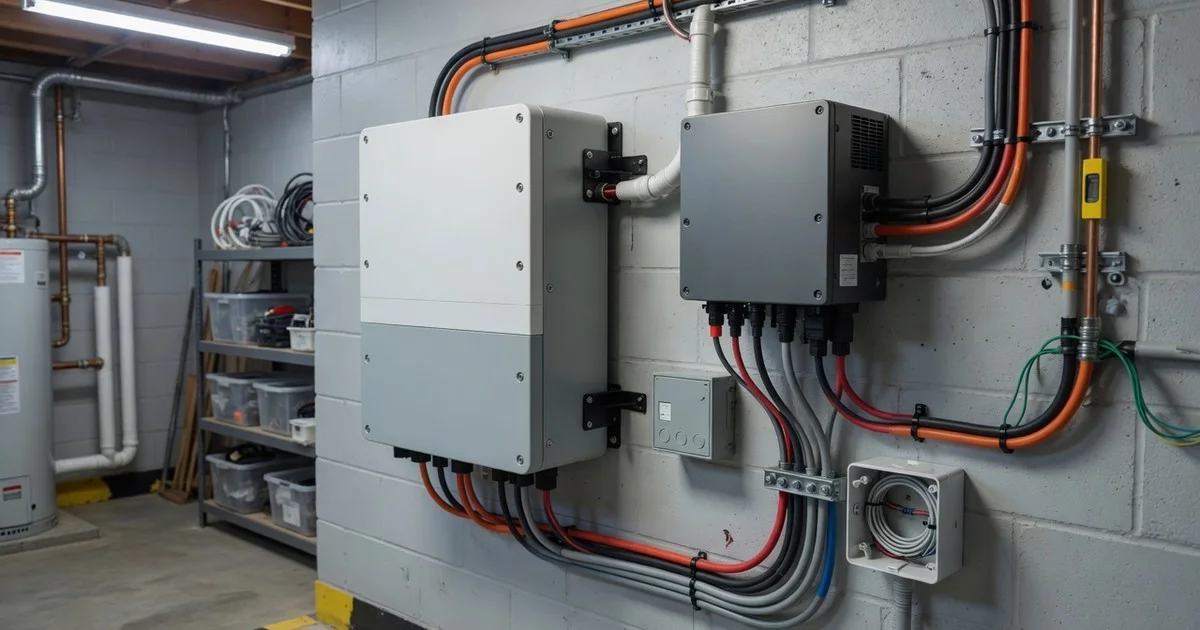


Tesla Powerwall 2 still shows up in many home battery talks. Some homes already have one. Some quotes still list it. Some sales decks quietly swap in a newer model. This page is a plain-English review for people who want useful numbers, not fan wars.
Quick answer
Powerwall 2 stores about 13.5 kWhof usable energy. It can back up key loads, store solar for evening use, and help on time-of-use plans. Whether it is worth the money depends on outages, export rules, and the full install price. The logo alone does not decide ROI.
Before you sign anything in 2026, confirm the exact model on the contract. Powerwall 2 is not the same product as every newer Powerwall version. Capacity, features, and price packages differ.
What Powerwall 2 does well
- Backup for lights, fridge, modem, and some larger loads when the critical-loads panel is designed well
- App monitoring most homeowners can learn quickly
- A brand many electricians already know how to service
- Pairing with solar so daytime power can cover evening use
Those strengths matter if blackouts stress you or if your utility pays poorly for exported solar at noon.
Where owners get frustrated
- Expecting one battery to run every AC unit, oven, and dryer through a long storm
- Focusing on the sticker while ignoring electrical work and permits
- Buying storage when the real problem was a bad solar loan fee
- Assuming “Tesla” means the bid is fair without checking dollars
Capacity in human terms
Think of 13.5 kWh like a fuel tank, not a magic house generator. A fridge and LED lights may sip from that tank. A big air conditioner drinks fast. Make a short list of must-have loads during an outage. Then ask the company how long those loads last on one full charge.
If the answer is only “whole home backup” with no load list, ask again. You want hours for specific circuits, not a slogan.
Solar + battery vs battery alone
With solar, the battery can charge from the roof during the day. That helps evening rates and outages. Without solar, you mostly charge from the grid. That can still help time-of-use plans, but the savings math is different. Force the quote to show both cases if you are unsure.
Cost questions that keep you safe
- What is the cash price for battery hardware and install labor?
- What electrical work is included or excluded?
- Which loads are on backup, by name?
- What is the guarantee length, and who comes out if it fails?
- Does any software feature need a paid plan later?
- Is the model Powerwall 2 or a different product?
If the salesperson only wants to talk monthly payment, pause. Monthly payment can hide dealer fees and long loan terms.
Powerwall 2 vs more solar panels
Extra panels make more daytime power. A battery moves power through time and covers outages. If your pain is evening rates or blackouts, storage can beat random extra modules. If you use most power while the sun is up and export credits are fair, more panels may come first.
Many homes do panels first, then storage later. That only works if the inverter and electrical design leave a clean path to add a battery. Ask about that path before you finalize solar-only.
Mini case notes (teaching examples)
Outage-focused home:A family with multi-hour grid cuts each summer cared more about fridge, lights, and internet than about shaving every dollar of the bill. One well-wired battery helped them more than a slightly larger solar array with no backup.
Weak export home:A home with poor midday export value used solar to charge the battery and run evening loads. Savings improved after they stopped treating export as free money.
Wrong first buy:Another homeowner signed a storage quote before fixing a roof that needed replacement in two years. They paid twice for labor. Roof first would have been cheaper overall.
Who should seriously think about it
- Homes with real outage history
- Homes on time-of-use rates with a big evening peak
- Homes with weak export value that still want to keep solar on site
- Homes with a fair install bid and a clear critical-loads design
Who should wait
- Roof is near end of life
- Main electrical panel is overloaded or outdated and not priced yet
- Quote shows only fancy monthly payments that hide the real price
- You may move within a couple of years and have not checked transfer rules
Related guides: best home solar batteries 2026 · battery backup calculator · are solar panels worth it? · cash vs loan vs lease
FAQ
How long does a Powerwall 2 last?
Read the exact guarantee on your quote. Real life depends on heat, cycles, and install quality. Do not use a random forum number as a contract.
Can one Powerwall 2 run my whole house?
It can cover carefully chosen loads. Whole-home comfort loads during extreme weather may need more storage or load shedding. Ask for a load list and estimated hours.
Is Powerwall 2 still the right buy in 2026?
It can be, if the price and design fit your goals. Also compare current models and non-Tesla options on usable kWh and full install cost.
Will a battery raise my home value?
Buyers like backup power in some markets. Appraisals vary. Do not count on a magic resale premium to fix a bad buy price.
Method note:Specs above are teaching figures for common Powerwall 2 capacity talk. Confirm the datasheet on your unit and the scope on your contract.
How to size backup hours without marketing math
List must-have loads during an outage. Guess watts from labels or a clamp meter if you have one. Multiply by hours you care about. Compare that energy need to usable battery kWh after real-world limits. If the numbers only work when you assume almost no AC, admit that now.
Critical loads panel vs whole-home dreams
Many installs put key circuits on a critical loads panel. That design is honest. Whole-home comfort during extreme weather may need more storage or automatic load shedding. Ask which design you are buying. “Whole home” without a load list is a slogan.
Software, app, and support questions
- Who do I call first if the app fails: installer or maker?
- Are remote updates automatic?
- Is any feature paid later?
- What is the process for a guarantee claim?
Heat, placement, and outdoor reality
Batteries dislike abuse. Follow the install manual on temperature and clearances. A bad location can shorten life more than brand choice. If the quote skips site photos, ask why.
Compare on usable kWh and full install price
Do not compare logo to logo. Compare usable energy, backup design, full cash price, and service path. A cheaper sticker with weak electrical work is not cheaper for long.
Related guides
battery shortlist · backup calculator · 100% solar question
This is educational only. Not financial or tax advice.
Storage shopping rule
Never let a battery quote skip the load list. If the company cannot name the circuits and estimated hours, you are buying hope. Hope is not a backup plan.
How to use this guide without getting sold
Read the quick answer first. Then skim the checklist sections. Only after that should you invite companies. Bring your yearly kWh and a notepad. Ask every bid for cash price, system size, model numbers, and exclusions. If those four items are missing, the conversation is not ready.
We write educational planning ranges. Your roof, utility, and labor market can move the number. Three written local bids still beat any article, including this one.
Reader action list
- Save this page and your utility bill PDF in one folder.
- Write your own dollars-per-watt math on paper.
- Compare at least three companies using the same format.
- Confirm incentives on official pages before you subtract them.
- Sleep on any same-day discount story.
More help: Start here · Costs hub · Buy solar hub · Contact.

