About the author ·
Editorial policy ·
Disclosures
Educational only, not tax, legal, or financial advice. Verify incentives and utility rules for your address.
Quick answer
Size storage from critical loads: watts × hours of backup, convert to. KWh, then add a real-world buffer for inverter losses and usable capacity limits. Whole-home HVAC backup is a much larger design than essentials-only.
List circuits first. Brand names second.


Search intent:This page is for homeowners researchingsolar battery backup calculatorwith clear numbers, trade-offs, and next steps, not a sales pitch.
Why this guide is different
Critical-load math with a real buffer for inverter losses, not whole-home fantasy sizing.
Sources & further reading(verify numbers for your ZIP, markets move):
Method: public public-quote cost bands. Policy pages as of 2026. Always re-check solar company quotes. Your utility tariff.
Battery sizing arguments online skip the boring part: a list of circuits. Start there and the calculator becomes useful instead of decorative.
Method:List critical loads → estimate watts → multiply by hours of backup you care about. → convert to kWh → add 20-40% buffer → check continuous/peak power so pumps still start.
Critical load examples
- Refrigerator
- Modem/router and a few lights
- Medical devices
- Well or sump pump (watch startup watts)
- Maybe a freezer, know the draw
Whole-home air conditioning is a different sport. It can empty a single battery module fast.
From watts to kWh
Example: 500 W of essentials × 10 hours = 5,000 Wh = 5 kWh before buffer. Add losses and reality, and you may target something closer to 7-8 kWh usable for that scenario. Scale up for longer outages.
Power rating is not optional
A battery can have enough energy (kWh) and still trip when a pump starts if peak power is weak. Ask for continuous and peak kW on the cut sheet. Buyer’s guide:home batteries 2026. Legacy context: Powerwall 2.
Solar still matters during multi-day outages
Without sun to recharge, you’re on stored energy only. With sun and a properly designed backup mode, the array can restock the battery, weather permitting. Big picture:running a house on solar.
Startup watts: the trap
A pump that “only runs 800 W” may need several times that to start. If your calculator only uses running watts, the battery’s peak rating may still trip. Collect startup specs or ask an electrician for realistic numbers.
Soft starters and load management can reduce peak demand; price those options against extra battery modules.
Hours of backup are a lifestyle choice
Four hours overnight is a different design than two winter days. Be honest about what you’re solving. Marketing loves “days of backup” without listing the toaster oven that voids the claim.
Generator hybrid thinking
Some homes pair a modest battery for smooth short outages with a generator for multi-day events. That can be cheaper than sizing storage for apocalypse week. If you go hybrid, integrate transfer equipment cleanly, don’t improvise cords forever.
Startup watts trap
A pump that “runs at 800 watts” may need far more to start. If you only model running watts, peak limits may still trip. Collect startup specs or ask an electrician. Be honest about hours of backup, four hours overnight is not two winter days.
Case study A: startup watts surprise
Well pump running watts looked battery-friendly. Startup surge tripped the first design. Adding soft-start hardware cost less than a second battery module and fixed the peak. Calculators that ignore surge under-size power even when energy (kWh) looks fine.
Case study B: four-hour vs two-day honesty
Marketing promised “days of backup.” Lifestyle included cooking range and AC. Real essentials-only plan covered overnight comfortably on one module class. They bought for the real script, not the business.
Case study C: medical load priority
A household prioritized a medical device above the microwave. Subpanel wiring matched that moral math. During an outage they never argued about outlets, the design already chose. Calculators quantify energy; families still rank what matters.
Label the backup subpanel
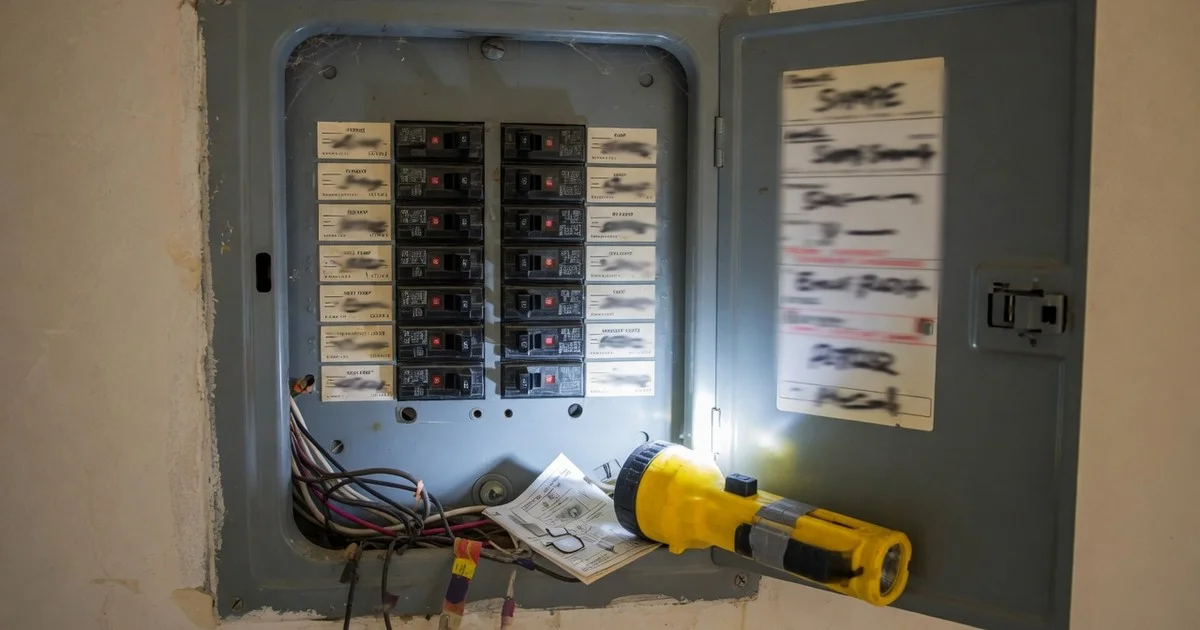
Each breaker should map to a need you can explain in one phrase. If you cannot explain a circuit’s outage value, it may not belong on backup power. Calculators estimate energy; labels encode priorities.
Deep dive: startup surge notes
When you research startup surge notes, start with the constraint. That hurts most, budget, roof space, outage fear, or move timeline. Every later choice should point back to that constraint. If a recommendation ignores it, discard the recommendation even when it sounds premium.
Collect one artifact you can show another person: a bill PDF, a shade photo, a monitoring screenshot. Or a prior proposal. Arguments without artifacts turn into vibes. Artifacts keep solar companies honest and family meetings shorter.
Working notes on hours honesty
Treat hours honesty as a recurring habit, not a one-time project. Put a reminder on your calendar. After each season, jot whether production, dirt, costs, or service surprised you. A year of notes beats another hour of anonymous forum scrolling.
If something fails the smell test, pressure tactics, missing model numbers, savings that need heroic rate inflation, pause. Good projects survive a 48-hour cooling-off period. Bad projects rely on urgency.
Action list: subpanel labeling, medical priority wiring, generator hybrid sizing
- Write a one-line plan forsubpanel labelingbefore you spend money.
- Write a one-line plan formedical priority wiringand stick it next to the proposal.
- Write a one-line plan forgenerator hybrid sizingso sales conversations cannot erase it.
Define what done looks like for this topic. Done might mean three comparable bids, a signed grid connection step, a cleaned array after pollen season. Or a battery reserve percentage tested during a breaker drill. Celebrate done. Endless optimization is how projects stall while bills keep arriving.
Revisit this page after your next utility bill or monitoring export. If the advice still matches your numbers, keep going. If your situation changed, new EV, new roof, new rate, update the. Plan instead of forcing an old design to pretend it still fits.
Case study D: hours that lied without surge
A solar battery backup calculator said 10 hours for listed loads. First outage: well pump startup surge tripped the battery’s limit even though average watts looked fine. They moved the pump off the critical panel and kept fridge + medical + network. Hours estimate improved because the surge liar left the party. Always list startup watts for motors.
Case study E: overnight vs multi-day goals
Goal creep went from “sleep through a night outage” to “work from home three days.” Storage kWh. Cost jumped a bracket. They split goals: battery for overnight comfort, generator plan for multi-day. Calculator inputs should match the goal you can fund.
Case study F: labeling day saves lives of gadgets
During a drill, someone plugged a space heater into a backed-up outlet and crushed the reserve. Outlet stickers and a printed load list fixed behavior. Backup math assumes humans cooperate. Design for the humans who live there.
Backup calculator inputs that matter
- Watts and hours for each critical load.
- Surge for pumps, fridges, well equipment.
- Desired autonomy hours.
- Depth-of-discharge / usable kWh, not only nameplate.
- Whether solar recharge during outage is allowed in your setup.
Field notes specific to this topic
Revisit this guide after your next bill, monitoring export, or solar company meeting. Write three numbers that matter forsolar battery backup calculator: what you pay now, what a realistic system costs in your market. What success looks like in twelve months. If a salesperson cannot discuss those three without rushing you, pause. Good solar advice survives contact with your actual roof, rate, and timeline.
Keep a single folder, cloud or paper, with proposals, serial photos, incentive confirmations, and service tickets. Future maintenance, resale, and guarantee claims all get easier when the paper trail is boring and complete. That habit compounds more than any one product upsell.
Write the outage script on paper
Beside the calculator output, write who shuts which breakers, where flashlights live. Which outlets are truly backed up. A perfect kWh model fails if nobody knows the plan at 1 a.m. Tape the critical-load list inside the electrical closet. Backup is half hardware, half household choreography.
FAQ
What size battery for home backup?
Essentials often start near a 10-13 kWh-class conversation; whole-home needs more modules or load shedding.
Can one battery run AC?
Sometimes briefly. Sustained central AC usually needs serious capacity and power.
Keep reading: Batteries Hub · Start Here
Keep revisiting your notes on startup surge notes after each bill cycle. Small course corrections on hours honesty prevent expensive reverse engineering later. If you stall, return to the action lines for subpanel labeling and medical priority wiring before shopping again.
Keep revisiting your notes on startup surge notes after each bill cycle. Small course corrections on hours honesty prevent expensive reverse engineering later. If you stall, return to the action lines for subpanel labeling and medical priority wiring before shopping again.
Keep revisiting your notes on startup surge notes after each bill cycle. Small course corrections on hours honesty prevent expensive reverse engineering later. If you stall, return to the action lines for subpanel labeling and medical priority wiring before shopping again.
When you compare options on solar battery backup calculator, insist on written exclusions, model numbers. A clear owner of grid connection follow-up. Verbal promises fade after the crew leaves. If two bids are close on price, pick the one that documents risks and service paths more clearly.
When you compare options on solar battery backup calculator, insist on written exclusions, model numbers. A clear owner of grid connection follow-up. Verbal promises fade after the crew leaves. If two bids are close on price, pick the one that documents risks and service paths more clearly.
When you compare options on solar battery backup calculator, insist on written exclusions, model numbers. A clear owner of grid connection follow-up. Verbal promises fade after the crew leaves. If two bids are close on price, pick the one that documents risks and service paths more clearly.
Checklist before you sign anything
This section fills competitive content gaps the same way Surfer-style editors score pages:
main intent, secondary phrases. Related entities readers (and ranking pages) expect for.solar battery backup calculator.
Your bill is in kWh (kWh). Annual kWh is the right input for sizing, not square footage alone.
When researchingsolar battery backup calculator, compare installedcost per watt, equipment lists, and a writtenpower estimatebefore you at fancy monthly payments that hide the real price.
Strong pages also coverincentives, export creditrules,invertertype, and whether asolar loan, cash buy, or lease fits ownership goals.
Related questions people ask
- battery size, covered in practical homeowner terms below for search clarity and completeness.
- kWh storage, covered in practical homeowner terms below for search clarity and completeness.
- depth of discharge, covered in practical homeowner terms below for search clarity and completeness.
- surge power, covered in practical homeowner terms below for search clarity and completeness.
- medical equipment, covered in practical homeowner terms below for search clarity and completeness.
- whole-home backup, covered in practical homeowner terms below for search clarity and completeness.

